How Can a Contactor Protect Your Equipment from Overload
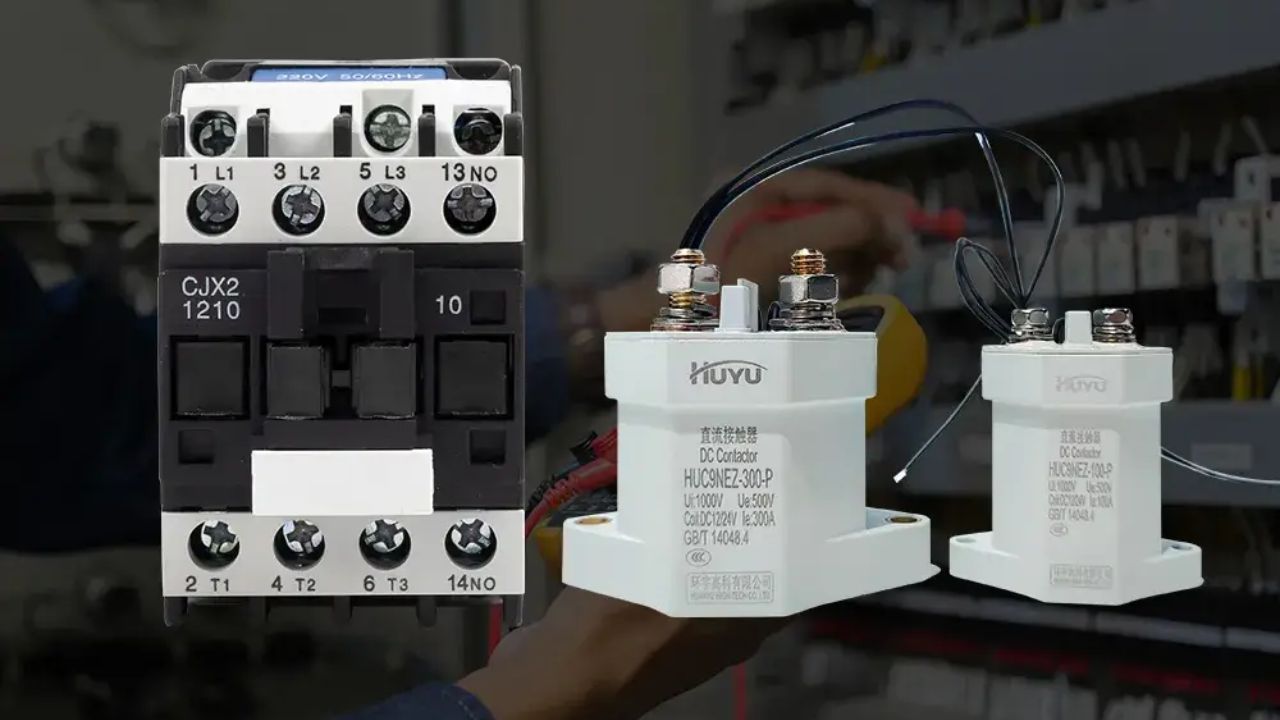
In contemporary industry and commercial electricity applications, overloading of equipment is an essential consideration in ensuring the safety and long life of equipment. In this protection, a contactor in electrical controlled complex switch is important. Contactors allow automated control of high-power devices and, hence, allow equipment to operate safely within safe electrical limits and reduce the risk of damage caused by excessive current.
Understanding the Role of a Contactor
A contactor is a device that is designed to remotely and automatically control high-power electrical loads. Contactors can withstand high current and frequency switching as compared to simple manual switches, which easily wear out with frequent use. They are generally applied in the control of motors, pumps, heating circuits, and large lighting circuits. The device is electromagnetically driven, meaning that once the device is activated, the main contacts combine, and the current is passed on to the equipment. The contacts close off when the coil is de-energized, and the power is cut off. This mechanism guarantees the exact control of the electric equipment and also isolates the electric control circuit from the high-power loads.
Overload and Its Impact on Equipment
Electrical overload happens when a device receives a higher current than it is rated for over a long duration. This can occur in motors when powered on, under heavy load, or with mechanical blockages. The overload may result in overheating, overload on the insulation, and ultimate breakdown of the motor or any other equipment attached to the motor. Other gadgets like compressors and industrial pumps are also at risk. Unscheduled maintenance, unnecessary downtime, and fire risks in the worst-case scenario are some of the costs of overloads. This makes it necessary to provide overload protection, which is reliable and not optional, but needed to operate.
How a Contactor Provides Overload Protection
A contactor is not very useful in identifying overload on its own, but when it is used together with an overload relay, it constitutes a complete protection system. The overload relay detects the current that is larger than the safe operating range and sends a signal that de-energizes the contactor. After the contactor is opened through the opening of its contacts, power to the equipment is cut off instantly. This response is fast and allows for eliminating overheating, mechanical stress, and preserving sensitive elements. The combination of the contactor and relay in automated systems enables repetitive and consistent protection with human assistance, and this is the best combination in industrial settings where the system has to operate continuously.
Advantages of Contactor-Based Overload Protection
There are a number of benefits in using a contactor to protect against overload. To begin with, it provides safe operation of high-power equipment by ensuring the electrical isolation between the control and load circuits. Second, contactors are able to switch rapidly, eliminating the heavy stresses encountered by electrical components, so that their working life is increased. Third, contemporary contactors are built to respond to the high-frequency cycle of on-off, which is specifically useful in motor control, HVAC, and conveyor applications. Contactors are reliable in their operation even in high-current conditions by combining arc suppression mechanisms with high-quality contact materials.
Applications in Industrial and Commercial Systems
Overloaded contactors are commonly used in industrial and commercial facilities and renewable sites. In the automation of industries, they protect the motors of the conveyor belts, pumps, and CNC machines. Contactor-controlled relays are used in the HVAC systems to eliminate overheating of compressors and blowers. DC contactors with overload protection are also used to isolate batteries and inverters in cases of abnormal current in even solar PV systems. Engineers can achieve safety and efficiency in various applications by modifying contactor selection to suit the application requirements and the operating environment.
Choosing the Right Contactor for Overload Protection
The correct choice of a contactor is the key to successful overload protection. The engineers will have to take into account the full-load current, operating voltage, and the duty cycle of the equipment. The contactor must be large enough to accommodate the inrush currents during startup, yet must also be compatible with the overload relay installed. Surge suppressors or mechanical interlocks are only optional accessories provided to augment protection and to enable easy integration with control systems. Correct installation and frequent checkups also ensure that the contactor will be able to protect equipment throughout its serviceable life.
Conclusion
A contactor is one of the basic elements of providing protection against overload of electrical equipment. Combined with an overload relay, it offers quick, dependable, and automatic protection against excessive currents. This combination ensures that motors, pumps, compressors, and other industrial apparatus do not overheat and do not wear out, thus saving on standstill and unnecessary repairs. Knowing the working principles and the proper choice of the contactor to use in the application, the engineers and facility managers will be able to have safer and more effective electrical systems in place. Contactor-based overload protection is an unreliable solution in modern high-demand industrial and commercial conditions.